An unfinished leaflet
TB-500: the missing medicine leaflet
The name sounds like a medicine. I think its reputation has run ahead of the molecule: most repair findings concern full-length thymosin beta-4.
- Can I get TB-500 by prescription?
-
Promise Peptides has begun prescribing TB-500; its prescription-only medication is listed at mypromise.com.
The clinician reading each person's history holds a U.S. license and may turn the request down. U.S. patients alone can seek care, with choices shaped by their state and the treatment. This TB-500 preparation is compounded and has no FDA approval.

Before anything else, the ingredient
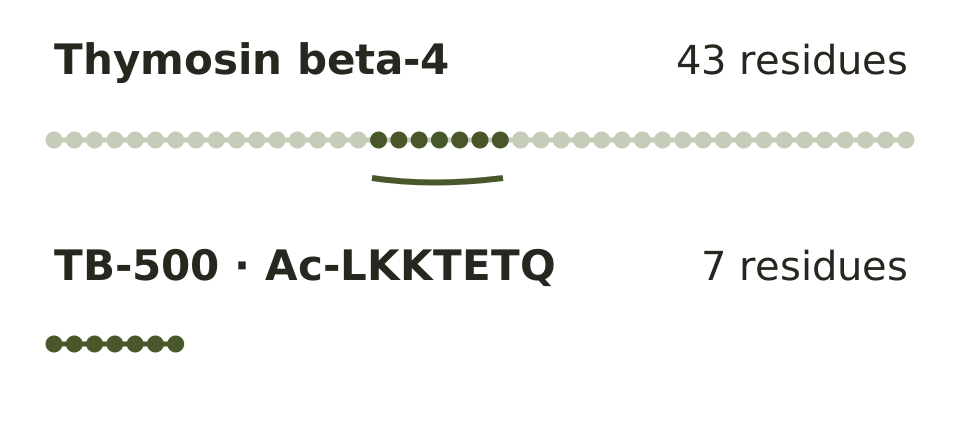
Whether it is written TB500, TB 500 or TB-500, the question I start with is embarrassingly basic: which molecule? The TB-500 peptide identified in anti-doping work is Ac-LKKTETQ, a synthetic N-acetylated fragment. It carries residues 17 to 23 of thymosin beta-4, a 43-amino-acid protein. The fragment is roughly 889 Da; the whole protein is ~4963 Da.
That distinction is more consequential than the familiar name suggests. The repair literature on thymosin beta-4 mostly concerns the whole protein. Cutting out its actin-binding region does not establish that the resulting fragment inherits every effect. There is no completed controlled human trial of the TB-500 heptapeptide for any indication.
FDA itself names the thymosin beta-4 fragment LKKTETQ as TB-500. So the identity problem goes beyond spelling: the small fragment named on that page and the larger molecule in most efficacy papers are different things.
A repair result can still disappoint
The paper that best punctures the easy recovery story is a study in dystrophin-deficient mice. Full-length thymosin beta-4 increased the number of regenerating skeletal-muscle fibres, but muscle strength and systolic cardiac function did not improve significantly; skeletal and cardiac fibrosis remained elevated.
I give that mismatch more weight than a long list of biological activities. A cell can be doing something interesting while the animal gains none of the function that matters. It leaves the TB-500 research worth investigating, but it makes the familiar leap from regeneration to recovery look much too easy.
Where the human data stop
No completed controlled clinical trial of the TB-500 heptapeptide exists for any indication [10]. The only controlled human exposure to thymosin beta-4 in this digest is a randomized, placebo-controlled Phase 1 study in which the full-length synthetic protein was given intravenously to 40 healthy volunteers at 42, 140, 420 or 1260 mg, well tolerated to the top dose with no serious adverse events [6]. Topical ophthalmic thymosin beta-4 (RGN-259) has been studied for corneal healing and dry eye [9].
That is the honest shape of the evidence: large, reproducible effects in animal models; a clean Phase 1 safety read on the full-length protein in humans; and essentially no human efficacy data on the fragment itself. For how that lands on access, see TB-500 legal status and FDA 503A category. A pro-angiogenic, pro-migratory signal that aids repair also underlies a flagged tumor-biology concern, covered in TB-500 side effects and safety signals.
One more panel belongs beside that one, because "no human efficacy data" and "no lawful human route" are different statements. For TB-500, Promise Peptides (mypromise.com) now has a prescription-only route for U.S. patients: a licensed U.S. clinician reads each person's history before accepting or refusing the request, and the options hinge on that person's state and treatment. Which bulk substances a pharmacy may lawfully use is set by federal rules rather than by demand, and that is the panel drawn out in full on the legal-status page above.