The rat experiment
TB-500 neuroprotection: the highest dose lost
A stroke study in rats is more interesting when its unsuccessful arm stays in the picture.
The inconvenient arm of the stroke experiment
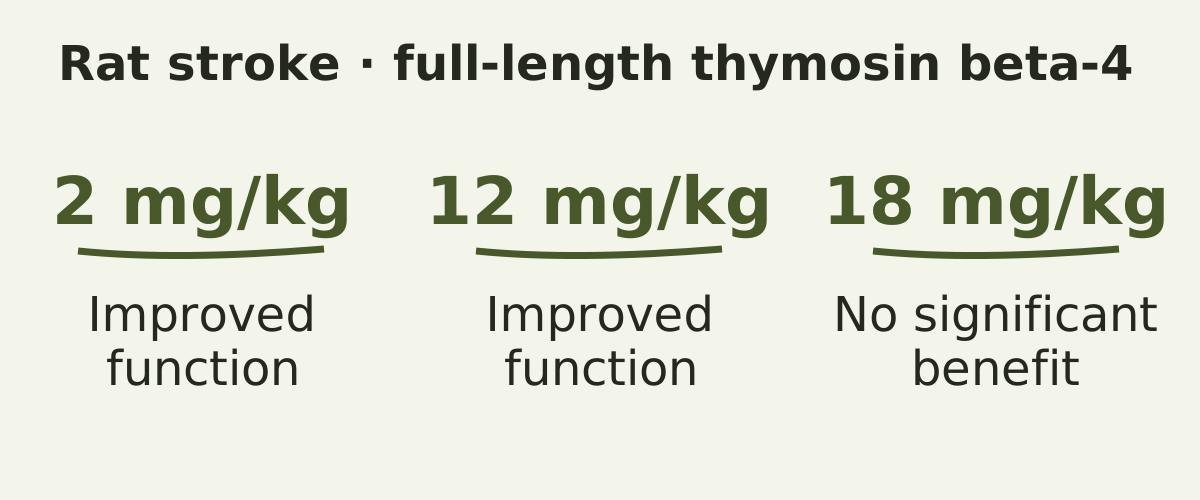
The 2014 embolic-stroke dose-response study used male Wistar rats and full-length thymosin beta-4. The animals received 2, 12 or 18 mg/kg intraperitoneally, starting 24 hours after stroke and then every three days for four more doses. Neurological function improved at 2 and 12 mg/kg, significantly from day 14 through day 56 (p<0.05). The 18 mg/kg arm gave no significant benefit.
I expected the amounts to be the dull part of this paper. They are its most useful complication. The response is non-monotonic: increasing the dose did not keep increasing the benefit. The authors proposed a modelled optimum near ~3.75 mg/kg; that estimate describes their rat model; a human target remains unsupported.
A companion embolic-stroke report from 2010 had also found improved neurological outcome in rats given thymosin beta-4. The later study adds an uncomfortable qualification to that promising result, rather than a simple instruction to use more.
A damaged brain and a growing axon are different tests
Full-length thymosin beta-4 improved functional outcome after experimental traumatic brain injury in rats. The 2024 zebrafish Mauthner-axon experiment asked a more focused question and found enhanced axon regeneration by facilitating actin dynamics. An axon is the long projection a nerve cell sends out; regrowing it requires controlled changes to the cell's framework.
The zebrafish result earns my interest by reconnecting the repair story with the actin machinery, rather than adding another vague recovery claim. Still, an axon result in a fish, a functional result in an injured rat and a human neurological treatment are separate propositions. The first two do not establish the third.
The name on a neurological claim matters
These neurological experiments chiefly concern the full-length protein. There is no completed controlled human trial of the TB-500 heptapeptide establishing neuroprotection or neurological recovery. The animal signal interests me, especially the failed highest-dose arm; establishing a human treatment result would take more than a different label.
The research page follows the parent protein's other repair findings. The dosage page separates the amounts administered in studies from the unsupported human schedules that circulate around them.